
For arguably the biggest band of the 2000s, Linkin Park was acutely aware of their musical impact. This especially holds true for the nu metal genre they emerged from but pledged no allegiance to.
“Once you got a theory of how the thing works / Everybody wants the next thing to be just like the first,” Mike Shinoda raps on their 2010 song “When They Come for Me.” The band didn’t resent their nu metal origins, but it’s clear their vision was to move past it – and it’s in fact the thing that helped them stay relevant long beyond nu metal’s fade from the mainstream in the mid-2000s.
Linkin Park’s ambition often polarized fans, but albums like A Thousand Suns and One More Light did much more for the band than continuing to regurgitate the sound of Hybrid Theory and Meteora. Yet, nu metal has managed to outlast the cultural zeitgeist. That’s because, while the group couldn’t care less about expectations, their early works influenced an entire generation of rock and metal.
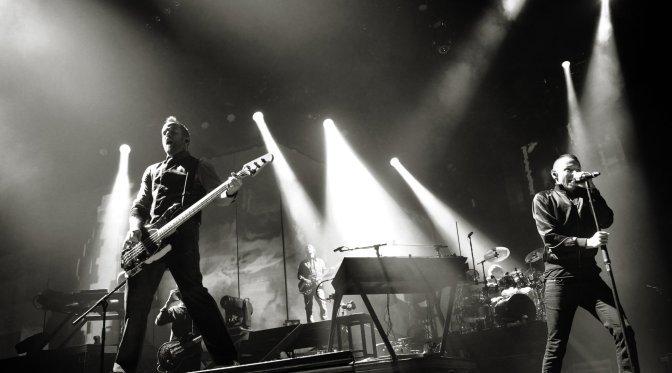
We’ve seen several waves of bands attempting to bring nu metal back to the spotlight. Suicide Silence incorporated nu metal-styled guitars into The Black Crown. Then Dangerkids and My Ticket Home fused their metalcore sounds with nu metal’s rhythmic riffs and rap vocals in the mid-2010s. Cane Hill and Ocean Grove brought their own stylistic twists in the late 2010s. Now 25 years removed from Linkin Park’s debut, 2025 is seeing another resurgence of artists paying homage to nu metal: Bleed, Split Chain, Thornhill, and more.
Paralleling these bands is the return of Linkin Park, who released their first full-length in seven years last fall with new vocalist Emily Armstrong. Armstrong has faced the near-impossible task of replacing the late Chester Bennington, and though reception has been mixed, the band is as omnipresent as ever. They’re churning through a world tour that featured a whopping 90,000 attendees at Wembley Stadium on June 28 – the largest non-festival crowd of the band’s entire career.
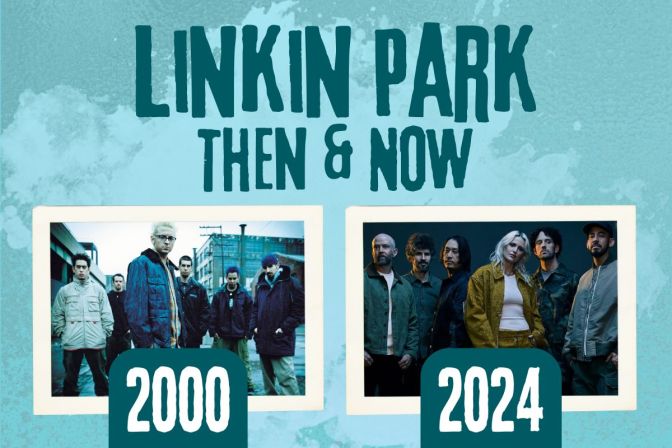
Linkin Park, as well as other nu metal stalwarts like Deftones, Korn, and Limp Bizkit, are as big a part of the rock discourse as ever, veering into legacy territory the way Metallica, Nirvana, and Red Hot Chili Peppers did a generation before.
Yet, while Korn is credited as nu metal’s most influential artist, Linkin Park continues to be its most successful. Hybrid Theory’s 17 million copies sold makes it one of the top-selling albums of any genre in the 21st century. In fact, I’d argue only Nirvana has had a bigger impact on rock music than Linkin Park in the past 30 years.
Linkin Park’s enduring popularity is obvious to anyone who grew up singing along to the hooks of “In the End” and “Numb.” Some music journalists have examined Linkin Park not as a rock act but as a pop act, and it makes sense. Strip away the heavy guitars and drums, and you’ve got ear-catching pop hooks and sing-alongs that rival the boy bands of their time.
But to understand Linkin Park’s lasting influence in heavy music in the past 20 years, let’s take the opposite perspective: Linkin Park as a metal band. Strip away the choruses, and you’ve got riffs and melodies that practically verge on metalcore. Just listen to the demos on Meteora 20th Anniversary Edition, and the chart-topping sing-alongs sound like something else entirely.
There’s a lot of electronic and keyboard experimentation to behold, but there’s also a lot of heavy, punchy guitar work on the demos for “Hit the Floor,” “Figure.09,” and “Faint.” Without Chester Bennington, you’ll recognize a lot of techniques of modern metalcore: down-tuned guitar leads and groove-laden breakdown passages. With its massive chorus, it’s easy to forget that the bridge in “Figure.09” is essentially a metalcore breakdown (the guitar sounds even gnarlier in the demo version).
It makes a lot of sense that members of The Devil Wears Prada, Issues, and A Day to Remember joined Linkin Park during their surprise appearance at the 2014 Vans Warped Tour. Jeremy McKinnon screaming along with Bennington for the breakdown in “A Place for My Head” is so seamless it’s a surprise we haven’t had a metalcore tribute album to Hybrid Theory yet.
You can see Linkin Park’s fingerprints on everything from Of Mice & Men and Bring Me the Horizon to Dangerkids and Code Orange. Bring Me the Horizon’s “Teardrops” is essentially a retooled version of “Somewhere I Belong.” Dangerkids is like if Mike Shinoda brought his rap verses to a scenecore band (“He’d put his favorite records on / Innerparty and Linkin Park,” Tyler Smyth raps on “Light Escapes”). There’s clear Brad Delson influence in the guitars of Cane Hill and Ocean Grove. The impact is everywhere.
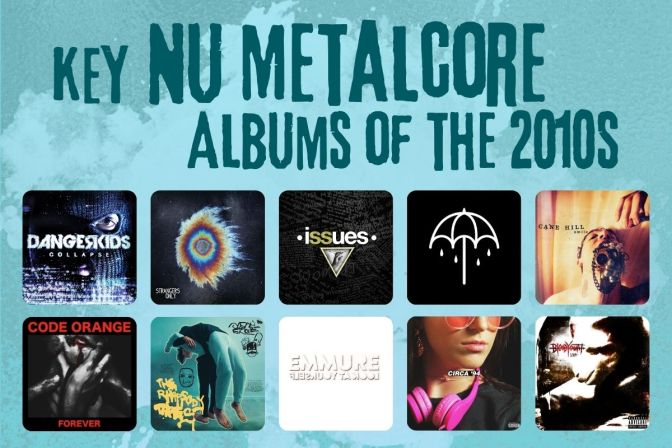
Nu metal was an experiment in genre fusion, and bands like Bleed and Split Chain continue to diversify the landscape. Whereas nu metal blended hip-hop and metal, current artists are blending the nu metal they grew up on with other genres, such as shoegaze, grunge, and alternative rock. Soon, we’ll probably see even more genre fusion as time gives way to an entirely new generation of artists.
Bleed wear their influences tight on their sleeves on their new album. Previously a member of Narrow Head, frontman Ryan Hughes puts Bleed in the category of “alternative metal,” given the variation of styles present on their debut – from the riff-heavy metal of Helmet to the grunge-punk of Quicksand. But the nu metal vibes are unmistakable, with guitars that pull from Meteora and White Pony. Lyrically, too, the broad themes of falling, pain, recovery, and answers feel like a page out of Bennington’s diary.
Split Chain, on the other hand, pays less tribute to Linkin Park and more to Deftones. Their grungy nu-gaze cozily fits them alongside Narrow Head, Superheaven, and Teenage Wrist more so than their metalcore contemporaries. It’s their rhythmic, groovy guitars that often bring nu metal to mind, especially on tracks like “Under the Wire” and “Subside” “bored. tired. torn.,” on the other hand, is their more atmospheric, shoegaze-leaning single, showcasing the band’s unwillingness to be pinned down.
Thornhill also retooled their sound with heavy Deftones influence. Bodies, which dropped in April, combines Chino Moreno’s dreamy vocal wallop with progressive metal instrumentation. The songs are clearly inspired by nu metal, spending less time building atmosphere and instead opting for in-your-face groove. The stylistic shift is so evident that listeners are even calling it “Deftones worship” – not that that’s a bad thing.
My Ticket Home has also returned to action this summer with “Tearjoint,” picking up where 2017’s unReal left off with riffs that wouldn’t feel out of place on a Korn record. Vocalist Nick Giumenti channels Bennington more in his clean singing than ever on the new track, the first off their upcoming full-length due out later this year.
Though we’ve only gotten two LPs from the band since 2013, they’ve set the bar for nu metalcore – in a style they’ve dubbed “puke rock.” The band originated as a scenecore band in a sea of soundalikes before tweaking their guitar sound around the grimiest of nu metal grooves. They signed to Rise Records around the same time as Dangerkids, with both bands an early representation of nu metal’s revival in the metalcore scene.
All of this is overshadowed by a new record from Linkin Park, a surprise release last fall with Armstrong revealed as their new vocalist. Formerly of Dead Sara, Armstrong’s raw energy and gritty delivery made sense for one of the biggest rock bands in the world, especially as they prepared a return to their nu metal roots. On From Zero, Linkin Park sounds closer to their first two records than anything since Meteora.. Given nu metal’s enduring legacy, the record felt less like a gimmick than an inevitability.
Bennington is irreplaceable, but Shinoda is Linkin Park. He controls the flow and tone of the songs, allowing for another vocalist to coat the songs with massive choruses. After all, the Meteora demos didn’t even have choruses, just riffs and raps to define the tracks we came to know and love. While From Zero isn’t a perfect record, it thrives on the strength of three excellent singles: “The Emptiness Machine,” “Heavy Is the Crown,” and “Two Faced” (“Heavy Is the Crown” is the lovechild of “New Divide” and “Faint,” while “Two Faced” could be mistaken for a Meteora b-side.) But more than anything, it’s just nice to have Linkin Park back – and the timing couldn’t be better given nu metal’s growing legacy.
Nu metal began to wind down following 2003’s Meteora, and Linkin Park knew they had to pivot to survive. By 2007, we were nearly a decade removed from Woodstock ‘99. Korn’s 2007 Untitled record was the first of their career to not be certified platinum, following several releases of diminishing returns in the mid-2000s. Additionally, Limp Bizkit’s Results May Vary was a far cry from Chocolate Starfish and the Hot Dog Flavored Water’s eight million copies sold.
Minutes to Midnight was a departure for Linkin Park, moving away from the nu metal sound into a more mainstream rock approach. But it was 2010’s A Thousand Suns that marked a complete transformation for the rap-rock outfit. The record mystified fans longing for the old days, with guitars mostly absent from their fourth LP. While a divisive release that received many negative reviews, time has done the record justice.
I loathed A Thousand Suns when it came out, but now I’m able to see the album in perspective. It’s like Kid A for angsty teenagers, full of edgy art rock mostly driven by electronica, piano, and vocals. It’s when we first started to recognize Linkin Park more as a pop act than a rock act, a deconstruction of guitar music rebuilt with minimal guitar. Again, that could be who they were all along, and we were just too distracted by the nu metal pomp.
When you throw away preconceived notions for what a Linkin Park album is, you’ll start to appreciate the magnitude of what the band accomplished on this release. A concept record about the fall of the atomic bomb, A Thousand Suns builds on Minutes to Midnight’s social consciousness to explore themes beyond the personal pain of Hybrid Theory: war, inequality, death, and destruction. Yet, it features some of their most uplifting singles to date in “Iridescent” and “Waiting for the End.” Most importantly, it was a record with something to say, showcasing both ambition and urgency.
If A Thousand Suns was a challenging listen, then One More Light – the band’s final release before Bennington’s suicide in 2017 – is a complete headscratcher. While the gravitation to softer, more melodic pop-rock across the late 2000s made sense for survival, they had moved back to heavier rock territory with 2014’s The Hunting Party. It’s clear that Linkin Park was on top of the rock world, with the power to do anything they wanted. No one could’ve predicted that they’d want to make their poppiest album to date next.
It took me a while to wrap my head around it, but like with A Thousand Suns, you have to once again remove all preconceived notions of what a Linkin Park record is. One More Light may not be a challenging listen from a musical standpoint, but it challenges the weight of expectation – and our tendency to gatekeep the bands we love. Shinoda made it clear back in 2010: “I’m not a robot / I’m not a monkey.”
While One More Light is by far Linkin Park’s softest release, it’s one of their heaviest from an emotional standpoint. The title track was written as a tribute to a fallen friend, but it quickly became a tribute to Bennington himself following his death. It’s a beautiful ballad and one of the best songs that band has ever written, regardless of genre. “Nobody Can Save Me,” “Battle Symphony,” and “Heavy” carry similar weight as mental health anthems with pop production and minimal guitar.
There is a clear incongruence between Linkin Park’s progression away from nu metal and new bands citing Hybrid Theory and Meteora as major influences. The group drifted far from their initial sound but proved themselves some of the best songwriters and musicians of their era, with genre only acting as a vehicle to showcase their abilities.
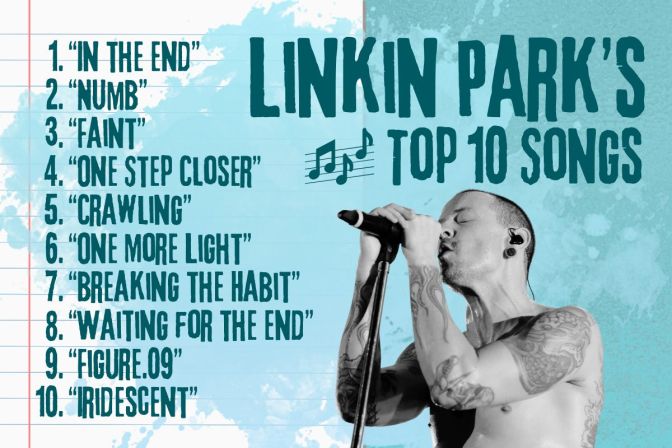
The reality is that Linkin Park had a grip on everyone who grew up in the 2000s – from the hip-hop heads to the angsty scene kids to the casual rock radio listeners. It’s no surprise, then, that nu metal has reappeared in the influences of metalcore bands in the past decade-plus. It affirms the immense legacies of artists like Linkin Park and Korn, as well as Limp Bizkit’s reassessment as a good band (just wait, Creed and Nickelback are next).
Linkin Park, of course, stands above their peers in terms of legacy. You can hear it in Jordan Fish’s keyboard on recent Bring Me the Horizon records and the general direction of metalcore away from technical mastery and towards downtuned riffs. You can hear it in Bleed, My Ticket Home, Ocean Grove, and the multitude of other groups who grew up blasting “Crawling” and “Numb” as rebellious teenagers. You can even hear it in Linkin Park’s new material, a reflection of how far they’ve come – and the triumph and tragedy along the way.
“This is not the end, this is not the beginning / Just a voice like a riot rocking every revision,” Shinoda raps on “Waiting for the End.” As Linkin Park’s legacy continues to grow, we’ll continue to hear it – whether it’s through them or our next favorite band.
Featured Image Credit: Mike Shinoda (Lou Brutus), Chester Bennington (Christopher Polk/Getty Images), Emily Armstrong (Cover Media)
Explore Linkin Park’s influence in and beyond nu metal with this playlist of songs by the band and many of the artists they’ve inspired.


