
“We got older, but we’re still young.”
When We Were Young is a festival that cashes in on nostalgia. It’s an opportunity to relive our youth, with 50-plus bands billed to play their most beloved albums in full. It’s an easy sell, and it’s also a reminder of what once was – rather than what’s happening in the now.
But while we may be done with the past, maybe the past isn’t done with us. I learned that firsthand when I attended this year’s festival.
Like The Starting Line lyric goes, When We Were Young was all about getting older. It turned out to be less about trying to recapture an impossible past, and instead unlocking the remnants of youth still left in us. It was a reminder that age is relative, that emo isn’t a phase, that you’re never too old to live out your dreams.
When We Were Young was a showcase of emo and pop-punk bands continuing to live out their dreams, from basement shows all the way to the Las Vegas Festival Grounds. It was a spitting image of the Vans Warped Tour – if Warped Tour had 10 times the attendees and featured nearly every major band to ever be a part of the scene.
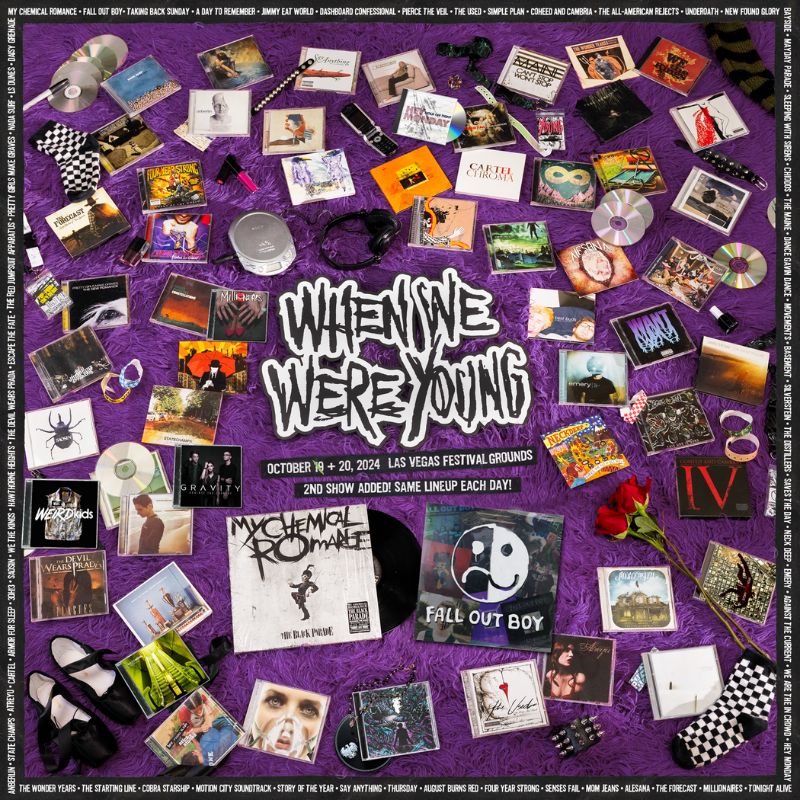
My Chemical Romance, Fall Out Boy, Jimmy Eat World, A Day to Remember: Each of these artists went from the underground to scene headliners during the 2000s to the main stage at When We Were Young. On this clear fall day, they got fans reminiscing on their glory days, but they weren’t pushovers milking the past. They were continuing to write their own unlikely stories, now with the bright lights of Las Vegas as the backdrop.
Exploring Vegas the night before the festival, there were fellow festival attendees everywhere. I could tell from the black band tees and eyeliner – a key differentiator amid the men in suits ready to hit the blackjack tables. We felt like fish out of water.
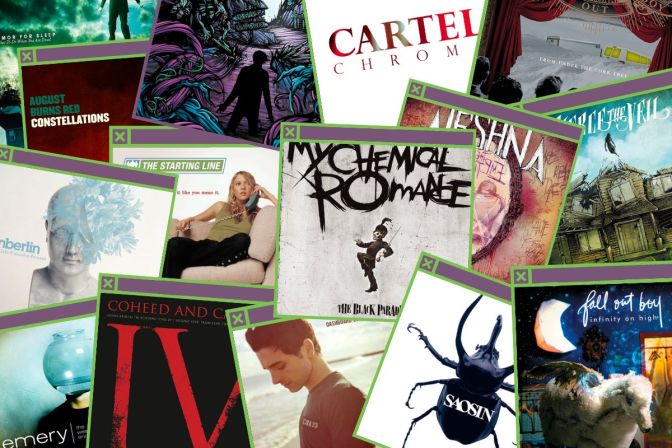
Remember how bands used to call Warped Tour “punk rock summer camp?” When We Were Young was like summer camp on The Strip: You’d make new friends you immediately shared a common interest with, and you were all there to make lifelong memories.
It started with a side show at the FontaineBleau’s BleauLive Theater, featuring The Used and Taking Back Sunday. Both would be playing the next day at When We Were Young. But these performances would feature career-spanning setlists, an opportunity to see two of the most formative bands of 2000s emo back-to-back.
While there’s a lot I could say about Taking Back Sunday (mostly negative), The Used remains at the top of their game. It’s all the more impressive given they’re now two guitarists removed from original member Quinn Allman. At 42 years old, vocalist Bert McCracken maintains the same edge he flaunted 20 years ago as the band powered through offerings from The Used and In Love and Death. He may be in New Balance shoes now, but he sounds as inspired as ever. “We’ve got a little festival tomorrow,” he jokingly understated.
Ironically, McCracken would overestimate his self-importance a bit, with The Used playing one song too many during their When Were Young set – and ultimately getting their set cut off by festival organizers. No band is big enough to get off schedule.
The schedule at When We Were Young itself did prove a challenge. With more than 50 bands performing in a single day, that’s to be expected. So, it made it tough as an attendee trying to make the most of a 14-hour day, all without wearing myself out. I would recommend making those tough choices in advance, and don’t plan to race to every stage to see every act. Otherwise, you’ll get tired fast.
Seeing The Used and Taking Back Sunday the night before meant they were skippable. I had seen Underoath, New Found Glory, Say Anything, and The Wonder Years play their particular albums in full previously, so I could miss them and not be upset. I had also recently seen 3OH!3, Bayside, Senses Fail, Story of the Year, and The Red Jumpsuit Apparatus play an emo festival back home, so I could cross them off the list.
There were some conflicts that caused me to miss some bands I hoped to see. I ended up choosing A Day to Remember over Dance Gavin Dance, Dashboard Confessional over The Devil Wears Prada, Jimmy Eat World over New Found Glory, Coheed & Cambria over Thursday, and Anberlin over Underoath.
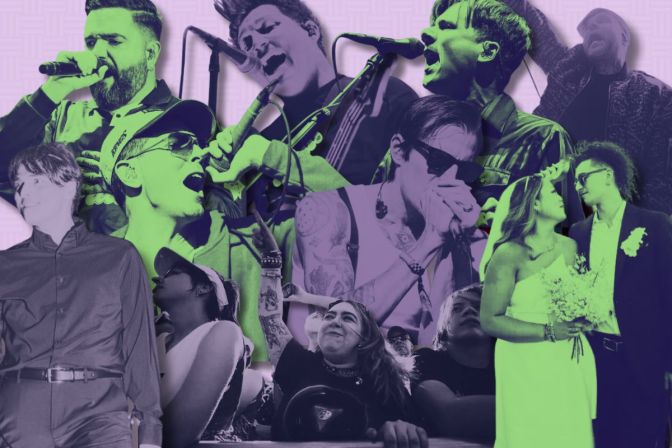
But for every band I did get to see, When We Were Young was an emo kid’s dream come true. Anberlin brought out Stephen Christian during their performance of Never Take Friendship Personal. Saosin welcomed back Cove Reber to celebrate their 2006 self-titled record. Patrick Stump did guest vocals with practically everyone. Coheed & Cambria played “Welcome Home.” The Starting Line played “The Best of Me.” Dashboard Confessional played all their hits.
On my flight to Vegas, I sat next to a woman from New Orleans also heading to the festival. It was nice to make a new friend you’d be sharing the Festival Grounds with – only I didn’t realize just how massive a crowd it would be. The only thing I could compare it to personally was the 2023 NFL Draft, which gathered more than 100,000 football fans at Liberty Memorial in Kansas City.
By nightfall, the crowd had increased dramatically, nearing the Festival Grounds’ capacity of 85,000. At that point, I joked that I would never cross paths with my friend from New Orleans. Yet, as I headed to the pit for Pierce the Veil, there she was. Talk about a needle in a haystack.
Pierce the Veil took the stage at nightfall, kicking off a non-stop run of the most-anticipated sets of the day. Vic Fuentes didn’t look a day over 30, nor did his high-pitched vocals sound much different than they did on Collide with the Sky. While the band is just starting to exit their prime (The Jaws of Life is their first album I would consider subpar), Fuentes assured fans they’re not going anywhere.
Pierce the Veil’s set epitomized their era of the scene, bringing together notable names of the past 15 years in celebration of their legacy – with letlive.’s Jason Aalon Butler, Sleeping with Sirens’ Kellin Quinn, Tonight Alive’s Jenna McDougall all providing guest vocals. With Quinn trading lines with Fuentes, “King for a Day” remains the scene’s most notable collaboration since The Used and My Chemical Romance covered “Under Pressure.”
A Day to Remember fronted the scene in the 2010s alongside Pierce the Veil, with their variations of post-hardcore and metalcore defining the “scenecore” era. A Day to Remember performed Homesick in full for the first time at When We Were Young – and if you read my retrospective on the record, you’ll know how big of a deal this was. While the band plays “The Downfall of Us All” and “If It Means a Lot to You” nightly, they ripped through under-the-radar gems like “Welcome to the Family” and “Holdin’ It Down for the Underground.”
Vocalist Jeremy McKinnon may have been tripped up a bit by the tracklist, but the metalcore outfit sounded tight as ever on the deeper cuts. The band says they needed to brush up on “like half the album,” with a few of the tracks difficult for McKinnon to perform live. It’s a testament to the strength of their style, merging the worlds of pop-punk and metalcore with screamed verses butting right up to clean choruses.
Bookended by Pierce the Veil and A Day to Remember, Jimmy Eat World were the festival’s elders. At a sprightly 48 years old, Jim Adkins hasn’t aged much in the past 20 years – and his band is still putting out quality music 30 years into their career. They’re the purest example of the fountain of youth, as the songs off 2001’s Bleed American have aged gracefully in comparison to the juvenile pop-punk of their peers. The album’s success is still a miracle, given the band’s departure from Capitol Records following Clarity.
With how unlikely the success of Bleed American was, it was even more unlikely that an entire crowd would be singing along to “The Middle” – a song the band didn’t expect to get radio airplay but ended up becoming one of the most famous rock singles of the 2000s. It was one of the two songs – along with “Sweetness” – that had the crowd overpowering Adkins’ vocals.
Before their acoustic finale, “My Sundown,” Adkins had a heart-to-heart moment with the crowd, showing his gratitude for Jimmy Eat World’s legacy. “It truly is an honor to be here,” he remarked. While the band may feel indebted to the scene, the scene is also indebted to them, as they paved the way for acts like Fall Out Boy and My Chemical Romance to cross over into the rock mainstream.
Fall Out Boy was one of the few bands that opted not to play an album in full, instead playing their “Days of Fall Out Past” setlist. This “greatest hits” performance featured songs from each of their albums – from Take This to Your Grave to So Much (for) Stardust. It was a smart choice, given the amount of hits across their discography – and it made for one of the biggest crowd-pleasing performances of the night.
The band kicked off their set with “Chicago Is So Two Years Ago,” a throwback to their 2003 debut that pays homage to their hometown. As Stump references “all the colors of the street signs,” you can’t help but recognize their journey from local hardcore up-and-comers to one of the most popular pop-punk bands on the planet.
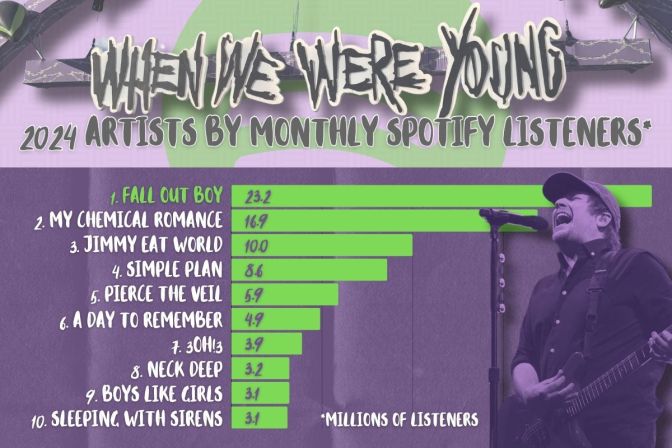
With fireworks lighting the sky over the Las Vegas Strip, Fall Out Boy ended their set with a bang – a 90-minute performance that, despite the band not headlining, felt like a headliner in every way. They’re one of the few acts in the scene unafraid of the spotlight, unwavering at every accusation of “selling out.” From their 2000s era of genre-defining pop-punk to their 2010s era of chart-topping pop-rock, When We Were Young was yet another key step – not merely a footnote – in their journey.
“Keep making weird shit,” Stump remarked between songs, a bold statement for a vocalist that wants “to be known for my hits, not just my misses.” If “weird shit” took these musicians in the punk scene to features with Elton John and Wiz Khalifa (Khalifa would join the band during their performance of “See You Again”), then that’s valuable advice for the next generation.
When We Were Young featured bands from all over North America, but one state is more synonymous with 2000s emo than any other: New Jersey. Headliners My Chemical Romance are the Garden State’s big name, but there’s also Thursday, Senses Fail, Saves the Day, and Armor for Sleep – and many others not on the lineup, like Midtown, The Early November, and Hidden in Plain View.
Being from New Jersey feels like an underdog story, which perhaps is what made the state a hotbed for bands to take over the scene. Across the river from Manhattan Island, you can’t help dreaming about what could be – a big city so close, yet so far away.
As you probably know, My Chemical Romance’s story began on 9/11. Their rise from the ashes of that day is an inspiration for any band. But it’s the result of artistic vision: Gerard Way’s creativity as a comic book artist giving way to a conceptual goth-rock act that took lessons from David Bowie, Queen, and Misfits – all the way down to matching marching band outfits.
Three Cheers for Sweet Revenge may be the band’s most synonymous record with the emo scene, but it’s The Black Parade that pushed the boundaries to become one of the 2000s’ standout rock moments. The Ringer even makes the case for My Chemical Romance as the last great rock band.
As the record that showed just how far the scene had come, The Black Parade was the obvious choice for When We Were Young – paralleling its journey from basement shows to the Las Vegas Strip. My Chemical Romance made their set yet another triumph in their story, pushing forward into the bright lights instead of trying to relive the record’s glory. As “The End.” began, the next installment in their career was underway.
The band had retired the marching band outfits on the 2007 tour, The Black Parade Is Dead! So rather than raise their wardrobe from the dead, they went an entirely different route: all black dress shirts and pants, footage on screens only in black and white – eventually giving way to blood red deeper into their set.
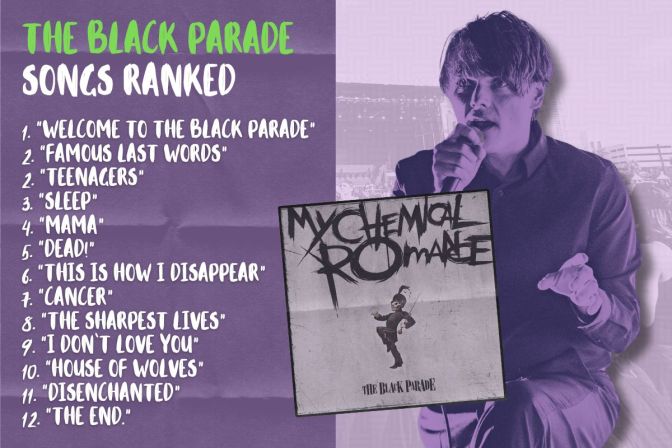
At 47 years old, Way already has a lifetime of artistic accomplishments – from fronting a band to creating comic book series. But he’s not one for complacency. As he belted through “Dead!” and “This Is How I Disappear,” his storytelling echoed through the city. Then there’s the single note that defined the scene, kicking off “Welcome to the Black Parade” – also known as millennials’ “Bohemian Rhapsody.”
Way seemed to have unleashed a whole new character on stage, a mad concoction of French New Wave cinema, shortwave radio host, and drugged-out Lou Reed. He warped into a man losing his mind, at one point calling on the crowd to “give me your best dog impression.”
It was a fitting prelude to “House of Wolves,” one of the album’s heaviest cuts. In “Mama,” his character blended right into the song’s narrator, with Way descending into chants of “mama” in the song’s siren-laden breakdown. Take cover: This thing’s going off the rails. But it picks up right in time for “Teenagers,” the emo earworm that could pass for a stadium rock “Hokey Pokey.”
Soon, The Black Parade was dead once again, and My Chemical Romance came out for an encore of “I’m Not Okay (I Promise)” and “Helena.” As Way concluded the night with “so long and goodnight,” the crowd chanted along with him – departing words that helped send off a day full of emo commentary.
As I left the venue, I couldn’t help but think about the kids who created these bands, and where those kids are now. To go from jamming in basements to creating art that will be passed down by generations. To go from kids with hopes and dreams to traveling the world playing music.
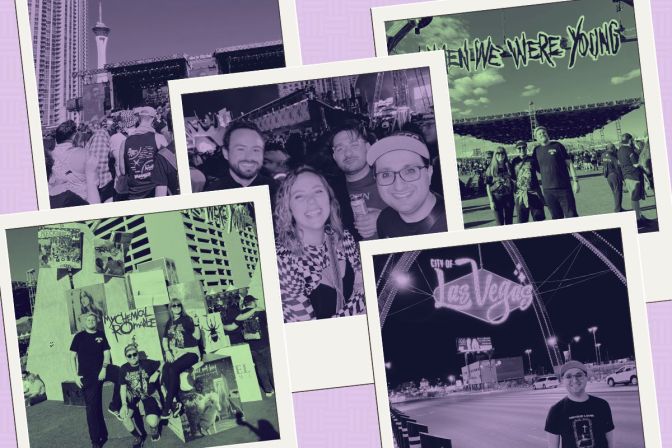
I looked at the people to my left and right. I saw how they’ve grown older but are still young at heart. This was not the past, this was the present. This was where the music we grew up on became timeless. We felt the songs so much more as angsty teenagers, but we feel the world so much heavier now.
With so many stories about how “your music saved my life,” these fans will keep moving forward themselves – saving their own lives with the music as the soundtrack. This is not a phase, it’s real life.
I can’t help but wonder what When We Were Young will look like in 10 years. Maybe we’ll see Twenty One Pilots and Yungblud represent the current generation, with Poppy, Ice Nine Kills, and nothing.nowhere. joining them. Maybe it’s bands that we don’t even know about yet, striving to be the next My Chemical Romance. Maybe it won’t even exist in the format we know it now.
But we’re seeing the legacy of the 2000s play out before our eyes – and it’s right here, right now. When We Were Young was the nostalgia fest I expected it to be, but it was so much more than that. It was a collision of the current moment, an apex of emo as the stuff of legends.
One moment, you’re teenager screaming along to Taking Back Sunday and Dashboard Confessional alone in your car. Then suddenly you’re alongside thousands of people on the Las Vegas Strip, and you’re all screaming along. You’re all in this together.
This day may have ended with “so long and goodnight,” but this story is far from over. As I reflect on one of my favorite memories, another My Chemical Romance lyric perhaps sums it up better: “We’ll carry on.” For a festival that celebrates the past, isn’t that the perfect metaphor for moving forward?
If you want to relive When We Were Young 2024, jam this playlist of songs from the bands who were there.

 The Verbatim